Sampling the wavefront
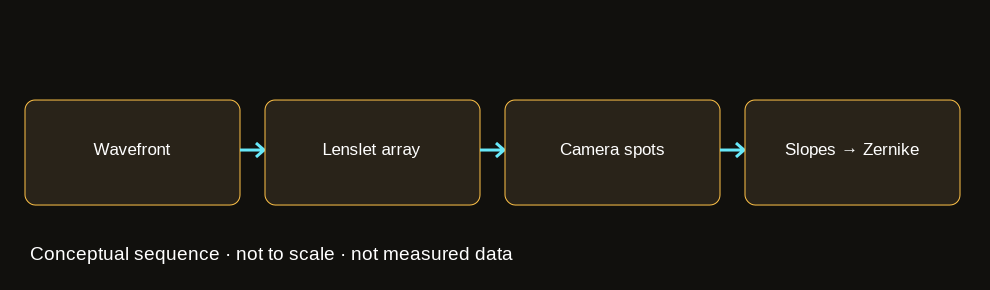
A lenslet array samples the pupil. Each lenslet forms a spot on a camera. A reference plane wave defines reference positions; a distorted wavefront displaces the spots. [1]
From slopes to shape
For small angles, local slope is approximately Δx/f in one direction and Δy/f in the other. f is the lenslet focal length. Reconstruction combines slopes into an estimated wavefront, which can be described by Zernike modes. Global piston cannot be recovered from these slopes alone. [1, 2]
Why qualification matters
Spot positions, reference calibration, noise and sensor dynamic range affect the result. Incorrect spot assignment can corrupt reconstruction. Mirror testing also requires the bench geometry: wavefront error is not automatically identical to surface error. [2]
Connection to my project
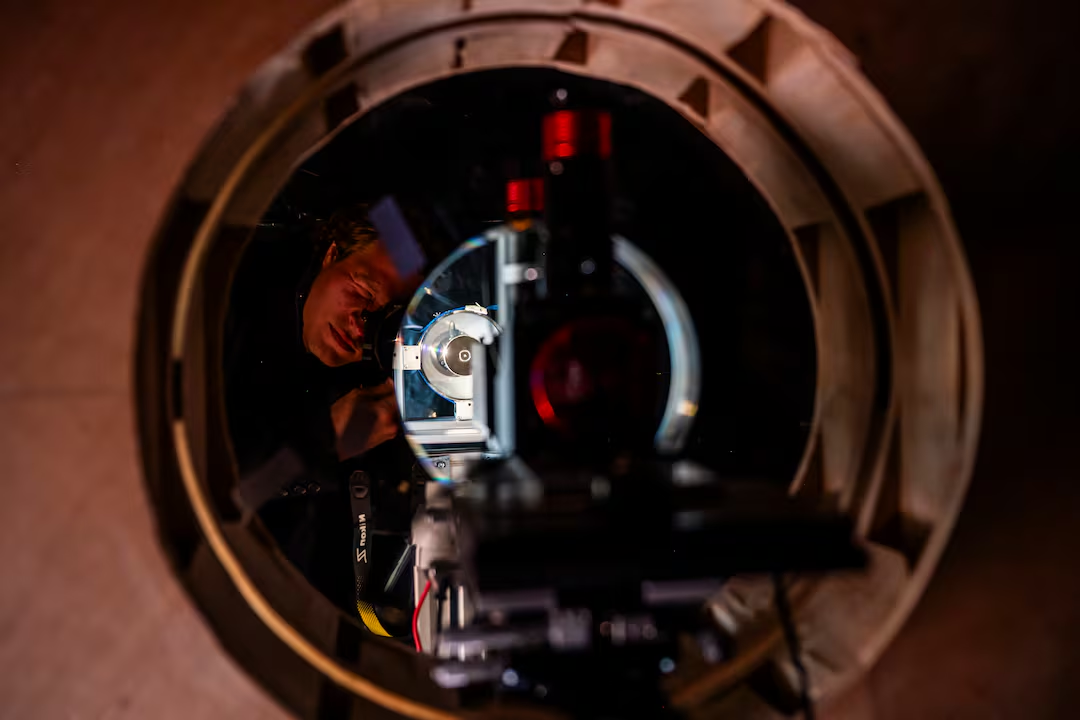
The Aldoria project covers large-mirror qualification, bench alignment and Zernike analysis. The photograph shows the bench; the diagram describes a general sensing principle. No additional measured performance is inferred from the illustration.