01 / Technology development
From physical principles to operational technology.
Telescopes, laser sources, metrology and sensors: my contributions to designing, prototyping and qualifying technologies for space surveillance, research and industry.
Aldoria · Space surveillance2025–2026
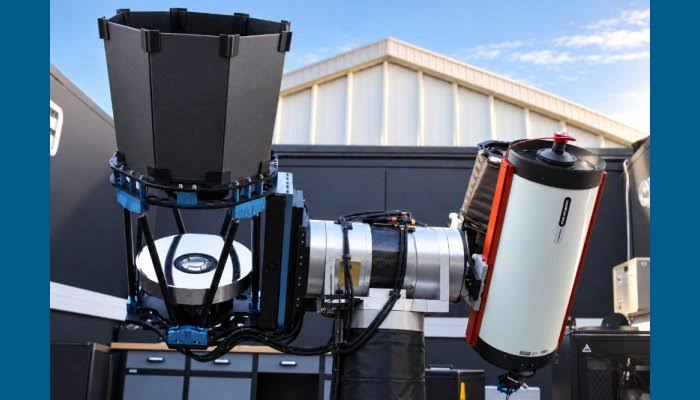
To meet space surveillance needs, development of the 500 mm telescope combines control electronics, a circuit board designed in KiCad and control software. Shack-Hartmann characterization in Germany precedes installation and optical alignment at an observatory in the Canary Islands.
Aldoria 500 mm telescope. Image supplied by Edgar CASTA; source article: AeroMorning.
How does it work? →
ElectronicsKiCadOptical alignment
Aldoria · Optical metrology2025–2026
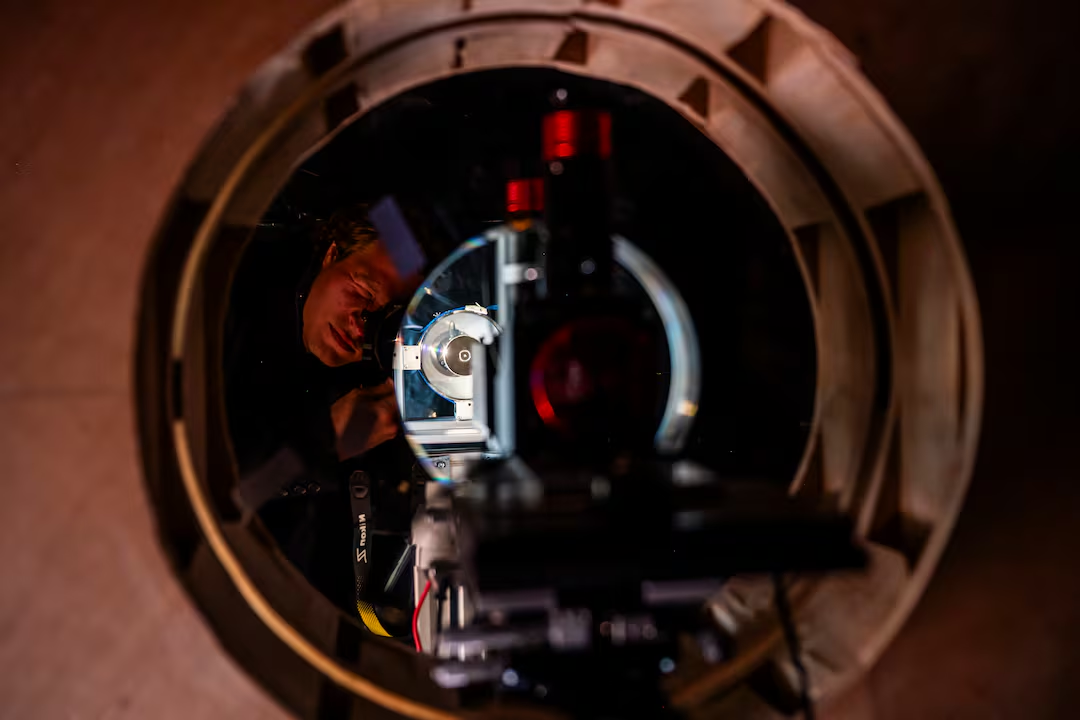
Qualifying large mirrors requires a metrology bench that provides reliable, comparable measurements. Development of the Shack-Hartmann bench focuses on an alignment method for mirrors up to 1,000 mm, Zernike coefficient calculations, software adaptation to the ANSI convention and tolerance analysis in Quadoa.
Shack-Hartmann bench photo supplied by Edgar CASTA. Source article: L’Usine Nouvelle.
How does it work? →
MetrologyZernikeQuadoa
Oxxius · Ultraviolet laser2022–2024
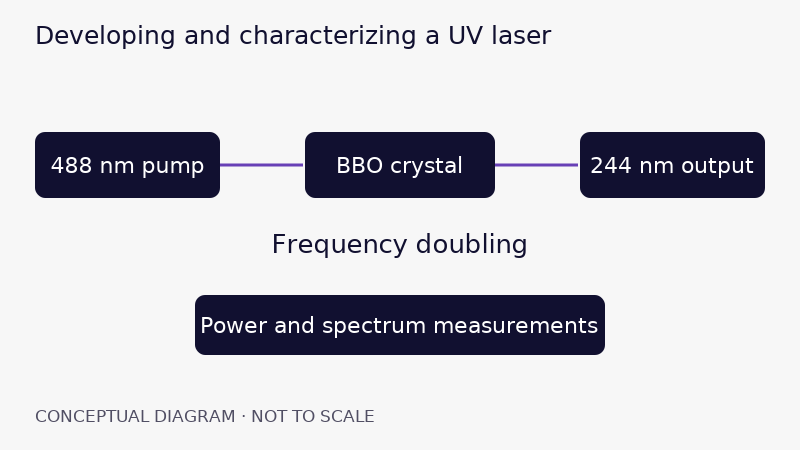
Fluorescence spectroscopy requires an ultraviolet source suited to sample excitation. The 244 nm laser uses frequency doubling in a BBO crystal. Its development combines optical design, bench instrumentation, power and spectrum measurements, Python simulations and tests to improve performance.
How does it work? →
244 nm laserFrequency doublingPython
Institut FOTON · CNRS2022–2024
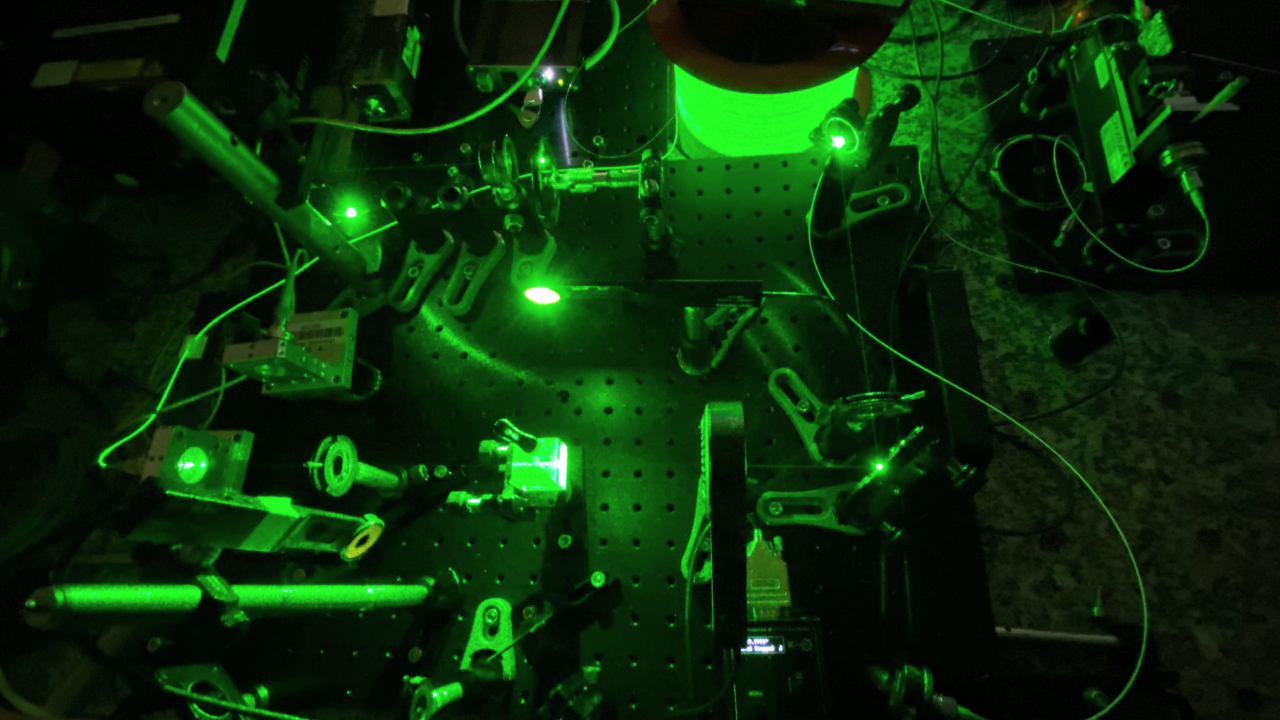
Quantum computing applications motivate the development of a low-noise visible laser source. The 532 nm Brillouin laser uses a fibre resonator; development work covers assembly, optical injection, power control and spectral characterization. Beat-note and frequency-noise measurements are automated in Python and MATLAB.
First Brillouin fibre laser prototype emitting at 532 nm. Source: Stéphane Trebaol — Institut FOTON, LinkedIn (20 August 2024).
Read the scientific article in Optics Express (2025) — « Hz-level intrinsic linewidth Brillouin fiber laser in the visible range ».
How does it work? →
Brillouin 532 nmFibre resonatorFrequency noise
CNRS PPRIME · Instrumentation2019–2021
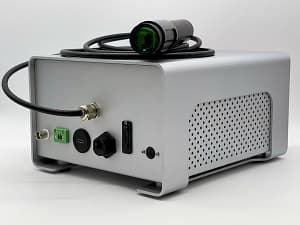
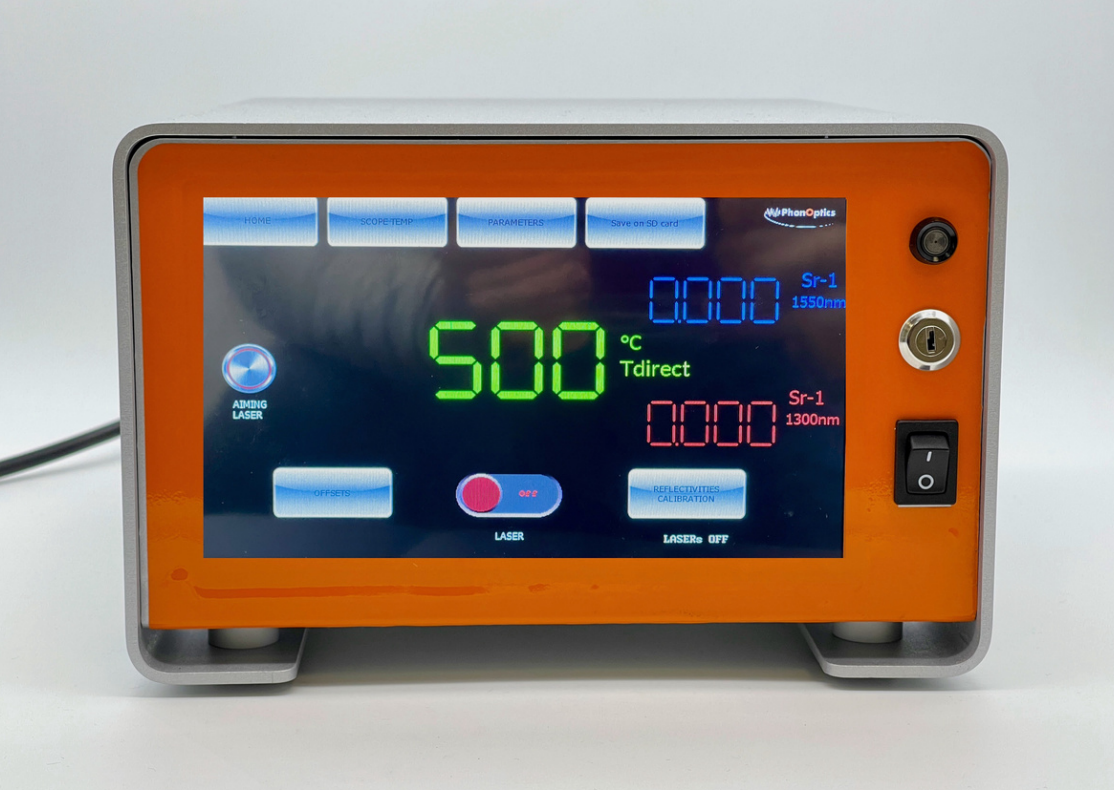
Non-contact measurement at high temperatures is the purpose of the two-colour pyroreflectometer. Development of its near-infrared optical head, calibration from 500 to 1,500 °C and uncertainty analysis support the transition from a laboratory prototype to an instrument intended for commercialization.
Commercialization: Phonoptics — ThermoRef.
Photo of the commercial ThermoRef; my work focused on its earlier development. View the patent diagrams ↗
Official Phonoptics brochure — ThermoRef (PDF, April 2022). Preliminary version V1.4: stated range of 500 to 1,500 °C, measurement at 1.3 and 1.5 µm.
How does it work? →
Non-contact measurementLabVIEWTechnology transfer
Arcys · Stereo vision2024
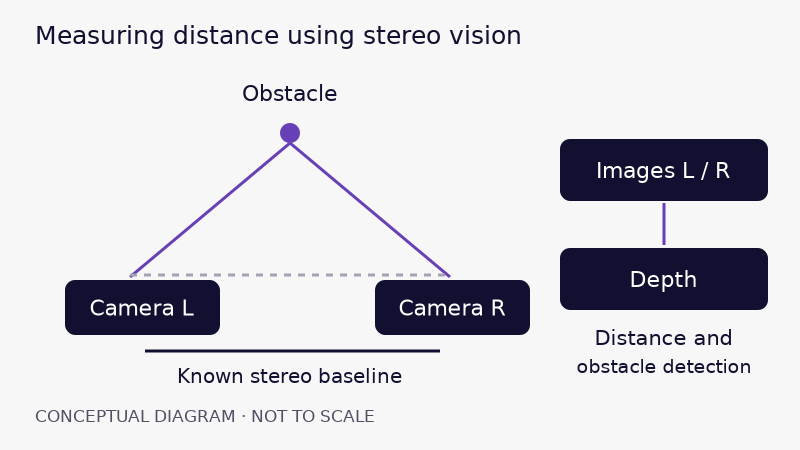
To detect underwater obstacles, the stereo vision system uses RGB images and depth maps. Validation relies on a test bench, latency and accuracy measurements, and algorithms developed with ROS2 and Python. On-site installation and user training complete commissioning.
How does it work? →
VisionROS2Validation